Every server in this book touches the disk. Express 24,430 serves static assets from a folder, multer 12,087 drops uploads into a directory, your logger rotates files, and your configuration loader reads .env before anything else starts. All of it goes through one module, node:fs.
The file system is also where the gap between your laptop and your server shows up first. You develop on Windows, where names are case-insensitive; you deploy to Linux, where Users.js and users.js are two different files. The node:path module closes that gap, and using it costs nothing.
node:fs carries Stability 2 in the Node.js 26.9.0 2,131 documentation; the few members marked otherwise are labeled where they appear below. Import it with the node: prefix so readers and bundlers can tell a core module from a package. 10 shows what happens when you call fs.readFile.
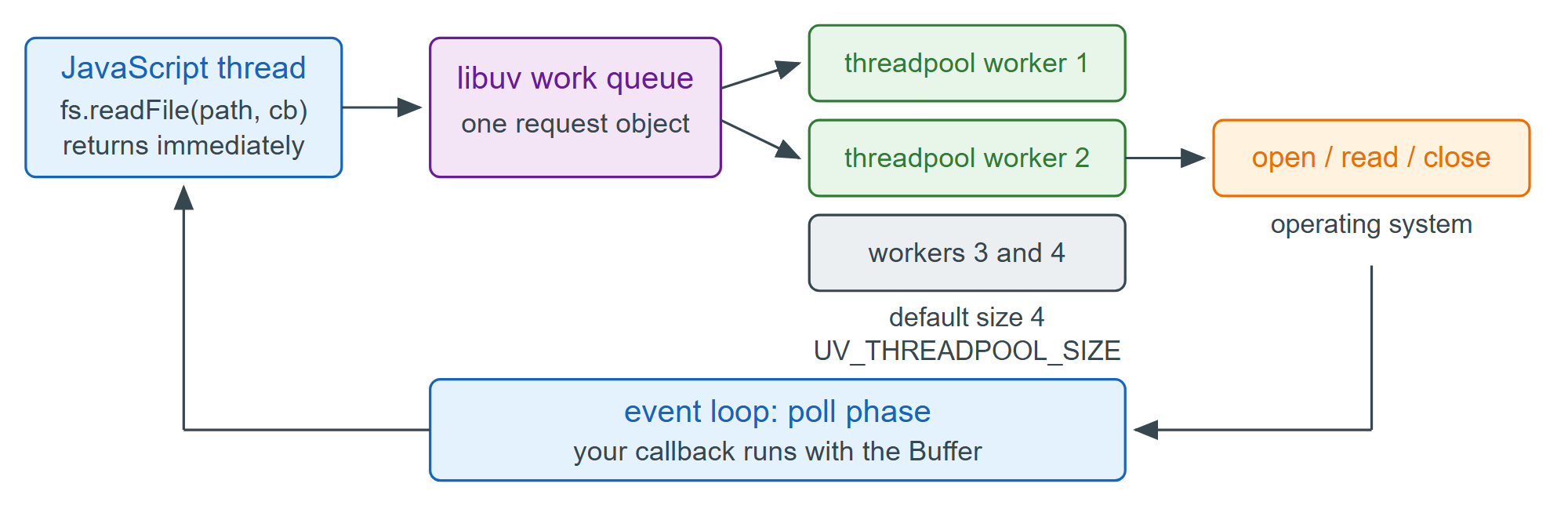
Two consequences bite in production. Asynchronous file work runs on four threads by default, so 200 concurrent reads queue behind four workers; and a synchronous call skips the pool, blocking the thread that serves every HTTP request your process holds.