Most days mix checking last night's pipelines, fixing what broke, building something new, and talking to the people who use the data.
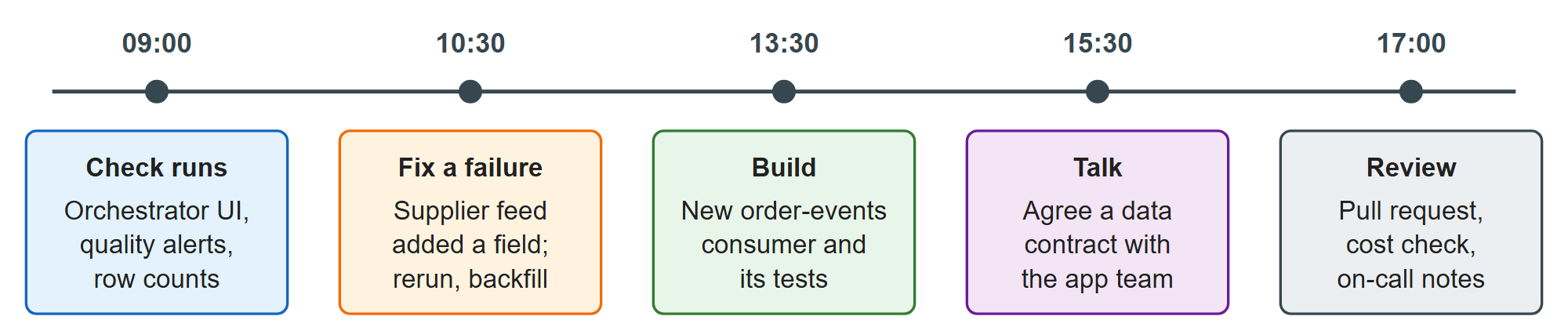
The morning check comes first because downstream users arrive soon after: a finance analyst who opens a stale dashboard at 09:30 loses trust that takes weeks to win back. The failure in the figure is the most common kind. Nothing crashed inside BookNest; a supplier changed the shape of its catalog feed without warning. The fix is a rerun plus a backfill (reprocessing the days that were missed), and the lasting cure is a data contract, an agreed and tested schema between producer and consumer (Anomalies, Contracts, Lineage).
Two habits separate experienced data engineers. They make every job idempotent, so running it twice gives the same result as running it once, which turns reruns and backfills into routine work (Pipeline Foundations). They also write down what a table means, who owns it and how fresh it should be, because the hardest bugs in data are not crashes but numbers that are quietly wrong.