A mobile test runs in one of two places. Jest 62,362 runs in Node on your computer: it loads React Native 36,878 's JavaScript, replaces every native module with a mock, and renders components into an in-memory tree. It is fast and needs no emulator, but it never draws a pixel or touches Kotlin. An end-to-end test installs the real app on an emulator or phone and drives it like a user, so it catches what Jest cannot (a missing permission, a broken config plugin, a crash only Hermes 11,328 produces) at the cost of minutes and a device.
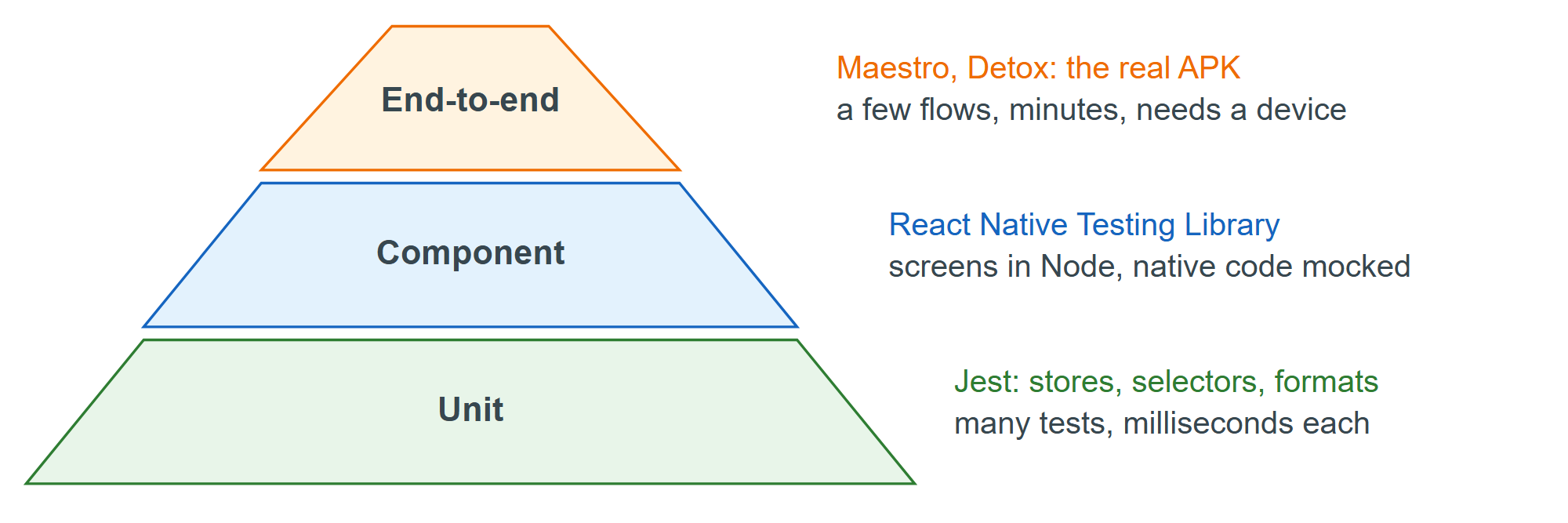
Keep many fast tests at the bottom and few slow ones at the top. The logic that Planning BookNest kept free of React Native (the cart store, byGenre(), the checkout schema) takes unit tests; screens take component tests that press buttons and read text; and a few end-to-end flows guard the journeys that must never break, such as adding a book to the cart. Test both platforms only at the top, where they actually differ.